Rent online in minutes
Contact Us
We will get back to you as soon as possible.
Please try again later.
Check out all 4,000+ of our locations on a map by clicking "Find Storage" in the menu!

4.8
RV Storage
What to Look for When Choosing RV Storage
An RV gives you the freedom to travel on your own terms, but storing one between trips is a problem most owners run into fast. A Class A motorhome doesn't fit in a standard garage. A fifth wheel parked in the driveway blocks sightlines and draws HOA violations. Street parking comes with size restrictions, weather exposure, and the general unease of leaving a six-figure vehicle on the curb overnight. At some point, every RV owner starts looking for a dedicated place to keep it.
RV storage gives your rig a secure, designated spot where it stays protected and out of the way until the next trip. The right facility makes ownership easier. The wrong one turns every pickup and drop-off into a frustrating ordeal that makes you question why you bought the thing in the first place.
What matters most in an RV storage facility is different from what you'd prioritize for a standard storage unit. Size and clearance are the obvious starting points. Class A and Class C motorhomes, fifth wheels, and toy haulers are tall, wide, and long. The facility needs aisles wide enough to maneuver without clipping mirrors or scraping corners, and if you're looking at covered or enclosed options, the vertical clearance has to accommodate your rig's full height including rooftop AC units, antennas, and satellite dishes. Surface quality matters more than most people realize - paved lots make backing in a 35-foot trailer dramatically easier than fighting gravel or rutted dirt, especially in wet conditions. Security should be standard - perimeter fencing, gated entry with individual access codes, and camera coverage across the property. Access hours need to match how you travel. If you like to leave for a weekend trip at 4 AM, a facility that doesn't open until 8 won't work. And month-to-month terms give seasonal RVers the flexibility to rent only during the months the rig isn't in active use.
The Storage Advantage lets you compare RV storage options across
multiple facilities, filtering by location, space type, and features so you can find a spot that fits your rig and your schedule.
Choosing the Right Type of RV Storage
The level of protection your RV needs depends on how long it'll sit, what climate it's sitting in, and how much you're willing to spend to shield it from the elements. Most facilities that handle RVs offer some combination of open, covered, enclosed, and indoor options, each with trade-offs between cost and protection.
Open RV Parking
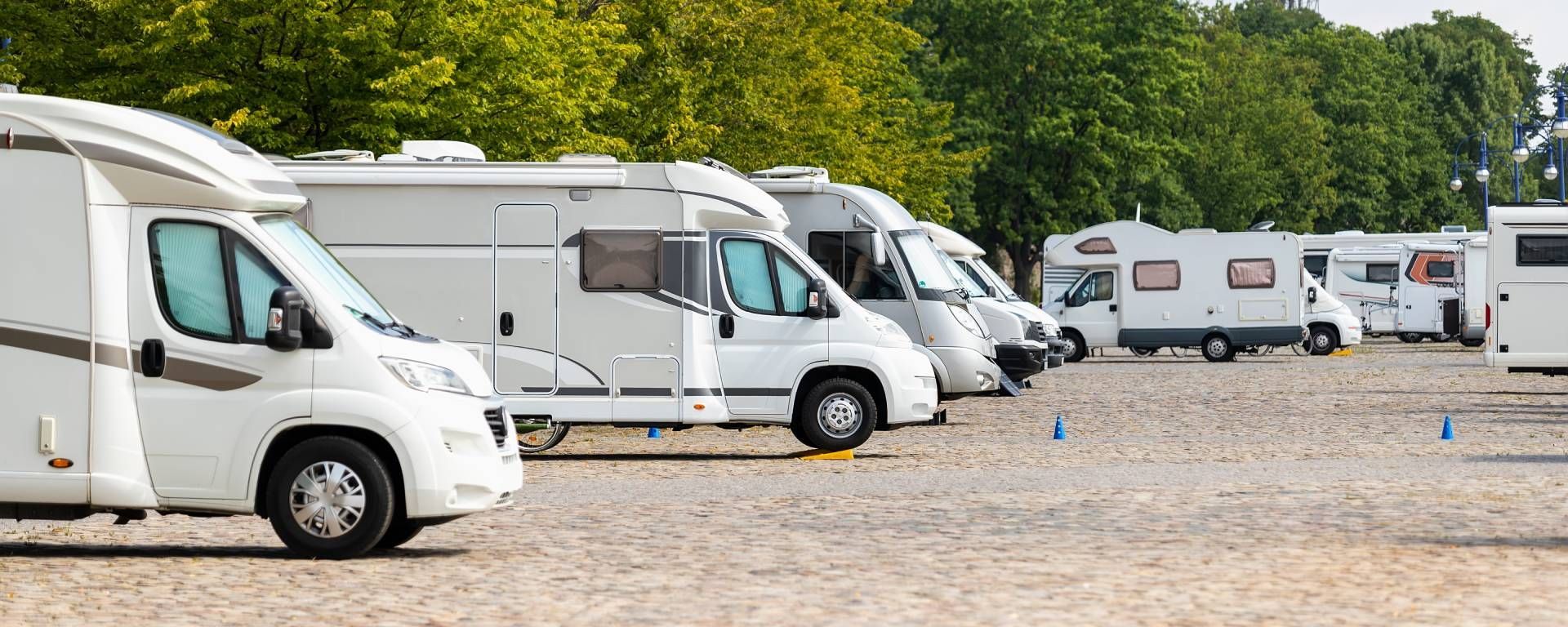
Open parking is the most widely available and budget-friendly RV storage format. Your rig sits on a designated outdoor spot within a fenced, secured lot - protected by property-level security but without any overhead cover. For RV owners who travel frequently and pull the rig out every few weeks, open parking makes practical sense because the RV isn't sitting idle long enough for weather exposure to cause meaningful damage. It's also the most common option in drier climates where rain, snow, and hail are less of a year-round concern. Height and length aren't issues with open parking since there's no structure to fit under, which makes it the default for oversized rigs like Class A motorhomes and large fifth wheels. Facilities that offer open RV parking often accommodate boat storage and vehicle storage in the same lot.
Covered RV Storage
Covered storage adds a roof structure over your parking spot, shielding the RV from direct sun, rain, hail, and falling debris while leaving the sides open for easy pull-through or back-in access. The overhead protection matters more for RVs than a lot of owners expect. RV roofs take the worst beating from weather - UV breaks down roof sealants and membrane material, standing water from heavy rain finds its way into seams, and hail can puncture rubber roofing or crack skylights. Covered storage significantly reduces roof-related maintenance and extends the life of your rooftop components including AC units, vents, and solar panels. In climates with intense summer sun or frequent storm activity, covered parking is the sweet spot between affordability and meaningful protection. Check the height clearance before committing - not all covered structures accommodate the full height of larger motorhomes with rooftop accessories.
Enclosed RV Storage
Enclosed storage places your RV inside a fully walled and roofed structure, providing complete protection from weather, UV, dust, pests, and visibility from outside. This is the highest level of on-site protection available at most facilities and the best fit for RVs stored through long off-seasons, expensive rigs with custom paint or graphics, and owners who want maximum security. Enclosed spaces typically offer drive-up access with wide roll-up doors sized for larger vehicles. The critical factor for enclosed RV storage is dimensional fit - measure your rig's height, width, and length including mirrors, slide-outs, and any rooftop equipment before renting. An enclosed unit that's too tight makes parking stressful and risks damage every time you pull in or out.
Indoor RV Storage
Indoor storage houses your RV inside a large warehouse-style building, sometimes with
climate-controlled or temperature-regulated conditions. This is the premium option and the least common for RVs, primarily because of the height clearance requirements - many standard indoor storage buildings aren't tall enough for a Class A motorhome or a fifth wheel. Where it's available, indoor storage offers the most complete environmental protection. Climate regulation prevents the mold, mildew, and condensation damage that's common in humid regions, and the building envelope keeps conditions more stable than any outdoor format. For high-value motorhomes stored through harsh winters or hot, humid summers, indoor storage protects the investment at a level that other formats can't match. Use the
storage unit size guide to understand what space dimensions work for different RV classes and trailer lengths.
How to Get Your RV Ready for Storage
Driving your RV into a storage space and walking away without any prep is how you end up with flat-spotted tires, dead batteries, frozen plumbing, and mice in the dashboard. A few hours of preparation before the rig goes in saves you from expensive surprises when it comes back out.
Exterior and Roof
Start with a thorough wash to remove road grime, bugs, tree sap, and any salt residue if you've been driving coastal or winter roads. Inspect the roof carefully - check sealant around vents, skylights, the AC unit, and any roof penetrations for cracks or separation. Resealing these spots before storage prevents water intrusion that causes hidden damage to the ceiling, walls, and subfloor over months of sitting. Retract all slide-outs and lubricate the seals with a silicone-based protectant to keep the rubber from drying out and cracking. Close all roof vents and windows, and consider a breathable RV cover for open or uncovered parking spots. Avoid plastic tarps - they trap moisture underneath and accelerate the problems you're trying to prevent.
Engine, Generator, and Electrical Systems
Fill the fuel tank and add stabilizer to prevent ethanol separation and varnish buildup in fuel lines. Run the engine and generator long enough for treated fuel to circulate through the entire system. Disconnect the house batteries or connect them to a quality trickle charger - a dead battery that sits for months often can't be recovered. If you're storing through winter in a cold climate, change the oil and replace filters so dirty oil isn't sitting in the engine corroding internal components. Run the generator under load for 15-20 minutes before storage to burn off moisture and carbon deposits.
Plumbing and Tanks
Drain the fresh water tank, gray tank, and black tank completely. Flush the black tank if your rig has a built-in rinse system. If temperatures will drop below freezing during storage, winterize the water system by running non-toxic RV antifreeze through all water lines, faucets, the toilet, and the water heater bypass. Turn off the water heater and drain it. Open low-point drains to clear any remaining water from the lines. Skipping this step in cold climates means cracked pipes, a damaged water heater, and a repair bill that dwarfs the cost of a gallon of antifreeze.
Interior and Pest Prevention
Remove all food, including canned goods and anything in sealed containers - if a mouse can smell it, a mouse will find a way in. Clean the refrigerator, leave the door propped open, and turn it off. Wipe down all surfaces to remove crumbs and residue. Place moisture absorbers in the main cabin, bathroom, and any enclosed storage compartments. Seal potential pest entry points - RVs have more gaps than most people realize around plumbing penetrations, wiring pass-throughs, and the undercarriage. Steel wool, expanding foam, and mesh screens at exhaust openings go a long way toward keeping rodents out during months of sitting
RV Storage Questions, Answered
What size storage space do I need for my RV?
It depends on the class and length of your rig. A small travel trailer (16-20 feet) fits a 10x25 or 10x30 space. A Class C motorhome or mid-size fifth wheel (25-32 feet) typically needs a 12x35 or larger. A Class A motorhome (35-45 feet) requires the largest available spots, often 15x45 or wider. Always measure your RV's total length including the hitch or tow bar, and height including rooftop accessories, before reserving.
Is covered or enclosed RV storage worth the extra cost?
For short-term storage in mild weather, open parking works fine. For off-season storage lasting several months, covered or enclosed options pay for themselves by protecting the roof, exterior finish, and rooftop components from UV, rain, and storm damage. RV roof repairs are expensive - preventive storage format choices are significantly cheaper than fixing water damage from degraded sealant.
Can I leave my RV plugged in while it's in storage?
Some facilities offer electrical hookups at individual storage spots, but this varies by location and isn't standard. If electrical access is available, it lets you keep house batteries charged, run a dehumidifier, and maintain the refrigerator. If not, a quality battery disconnect switch or solar trickle charger keeps batteries maintained without shore power.
Do I need to winterize my RV before storing it?
If storage temperatures will drop below freezing at any point, yes. Winterizing the water system prevents cracked pipes, a damaged water heater, and burst fittings. The process involves draining all tanks, running antifreeze through the water lines, and bypassing the water heater. Even in mild climates, a basic prep routine before storage protects against humidity damage and pest intrusion.
How often should I check on my RV during storage?
Once a month is a reasonable schedule for long-term storage. Check tire pressure, look for signs of pest activity, inspect the roof for pooling water or debris, and verify that battery maintenance systems are working. A quick monthly visit catches small problems before they become expensive ones.
Can I store my RV with personal belongings inside?
Most facilities allow it, but remove anything perishable, temperature-sensitive, or valuable. Food attracts pests. Electronics and medications can be damaged by heat and humidity in non-climate-controlled storage. Clothing and bedding are fine to leave if the interior is clean and moisture absorbers are in place, but take out anything you'd be upset to lose or find damaged.
Find RV Storage Near You
Your RV should be ready to roll when you are, not recovering from months of neglect in a bad storage setup. Search RV storage options on The Storage Advantage to compare facilities near you by space type, features, and location, and lock down a spot that fits your rig.