Rent online in minutes
Contact Us
We will get back to you as soon as possible.
Please try again later.
Check out all 4,000+ of our locations on a map by clicking "Find Storage" in the menu!

4.8
Finding Self Storage in Topeka, KS
Marketing.Storage Store locator is loading
 Kansas
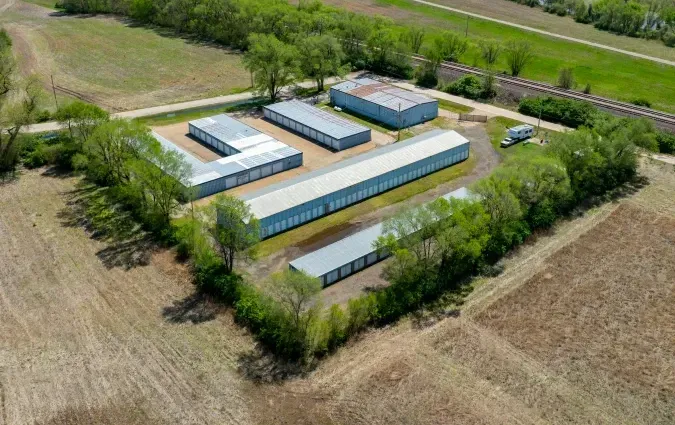
Topeka Self Storage | NE Grantville Rd
 Kansas
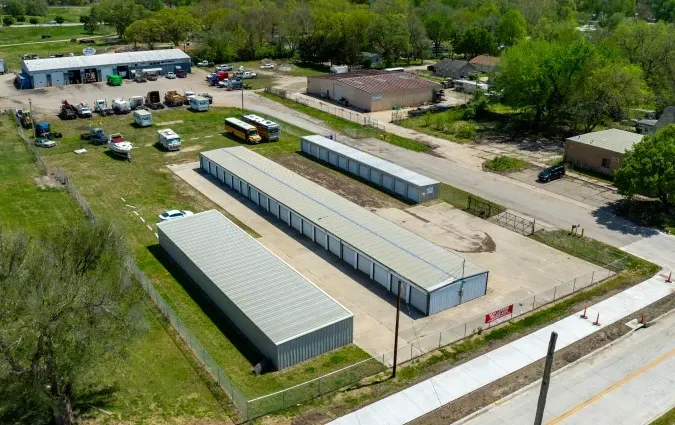
Topeka Self Storage | Tyler St
Topeka is the capital city of Kansas and the county seat of Shawnee County, situated along the Kansas River about 60 miles west of Kansas City. As the seat of state government, Topeka's economy is anchored by public employment - roughly 19% of its workforce is employed by government agencies - which creates a steady cycle of relocations and household transitions that generates consistent storage demand throughout the year. A major regional hospital system, a municipal university, a large railroad operation, and several industrial manufacturers add to that picture: Topeka's storage market reflects households in motion, arriving for government postings, transitioning between healthcare placements, graduating and launching careers, or navigating the lease cycles of a city where more than 43% of residents rent.
Topeka was laid out in 1854 as a Free-State town along the Kansas River, and its historic neighborhoods still carry that early character - Victorian streetscapes in Potwin Place, craftsman bungalows in Holliday Park, 1920s model homes in Westboro. Nearly 19% of Topeka's housing units predate 1940, meaning compact floor plans and limited closet space that drive consistent off-site storage demand. For a full picture of options across the state,
self storage in Kansas connects you to facilities throughout Shawnee County and beyond.
Topeka's Climate and What It Means for Your Storage
Topeka sits at the eastern edge of Tornado Alley with a climate that delivers real extremes in every season. Summers are hot and humid - July highs average around 88-90°F with overnight lows near 68°F, and humidity ranges from 62% to 72% throughout the year. May is the wettest month, and severe thunderstorm season runs through June. Kansas averages close to 100 tornadoes annually; Topeka has direct experience with this risk from the June 1966 tornado, one of the costliest in U.S. history at the time. Winters are cold and periodically snowy, with January highs near 38°F and lows around 23°F, and hard freezes common from December through February.
That range of conditions creates real problems for unprotected stored items. Summer heat and humidity promote mildew in upholstered furniture, fabric, clothing, and paper. Winter cold can crack electronics, damage ceramics, and degrade adhesives in standard outdoor units. Spring and summer severe weather - including hail and high winds - adds risk for items without a stable, enclosed environment.
Climate-controlled storage maintains a consistent interior temperature year-round, removing the summer humidity threat and the winter freeze risk alike. For furniture, documents, instruments, electronics, or anything stored long-term, it's the right call for Topeka's climate. Our
self storage FAQ covers unit security, access, and lease terms before you commit.
Storage Unit Sizes and Features in Topeka
Facilities in Topeka offer unit sizes ranging from 5x5 lockers - useful for seasonal items, files, and boxes - up to 10x20 and larger spaces suited for full household moves or business inventory. A 10x10 holds a one-bedroom apartment comfortably; a 10x15 adds a second bedroom or a larger living room set; a 10x20 handles a full three-bedroom home or contractor equipment. Our
storage unit size guide walks through real-world comparisons so you can match your unit to your actual inventory rather than guessing.
Drive-up storage works well for households loading furniture, small business owners managing inventory overflow, and outdoor enthusiasts storing gear for Lake Shawnee and Gage Park. Renters in Topeka's older housing stock - particularly in the pre-1940 neighborhoods on the north and central sides of the city - frequently use storage to handle overflow that compact historic homes can't absorb.
Indoor storage inside a climate-managed building provides extra protection from Topeka's seasonal temperature swings, while
business storage serves small businesses and independent operators in the NOTO Arts District, the downtown redevelopment corridor, and the Wanamaker retail corridor. Security features to confirm before reserving include coded gate access, camera coverage, and sufficient lighting for early morning or evening visits.
Self Storage Across Topeka and Shawnee County
Topeka's neighborhoods each carry distinct histories and housing types, and storage demand tracks those differences closely — from the Victorian streetscapes of Potwin Place to the newer construction of southwest Topeka's Wanamaker corridor.
- Downtown / Kansas Statehouse District: The Kansas Statehouse anchors Topeka's downtown, surrounded by state agency offices, courthouses, and the professional services that support state government. The downtown core has seen more than $500 million in recent and ongoing redevelopment — including Evergy Plaza and a growing inventory of loft apartments — that is bringing residents back to a corridor that was largely suburban-bound between the 1960s and 1990s. State employees cycling through agency postings, downtown apartment residents with limited in-unit storage, and small businesses in transitional commercial space all generate steady demand for off-site storage within reach of the Statehouse corridor.
- NOTO / North Topeka: North Topeka — known as NOTO — sits across the Kansas River from downtown and functions as the city's arts and entertainment district. More than 40 outdoor murals and sculptures line Kansas Avenue, which is home to around 50 independent businesses including galleries, antique stores, craft breweries, and restaurants. The neighborhood also has a significant industrial presence on its west side and modest pre-1940 residential homes to the east. Artists, creative professionals, small business owners, and longtime residents in compact older housing all use storage to manage the overflow that North Topeka's character-rich but space-limited buildings create.
- Holliday Park: One of Topeka's oldest and most architecturally varied neighborhoods, Holliday Park contains the city's most concentrated collection of Victorian and Edwardian-era homes — Italianate, Queen Anne, Colonial Revival, Craftsman, and Bungalow styles built from the turn of the century through the 1920s. The neighborhood has seen steady revival as residents restore and preserve its historic fabric. Renovation projects, estate transitions, and limited storage capacity in homes built well before modern closet standards all drive consistent off-site storage demand here.
- Westboro: Westboro's homes were built primarily in the 1920s and 1930s, many of them original model homes created by the L.F. Garlinghouse Company — a Topeka-based firm whose floor plans were distributed nationally via annual catalogs. The neighborhood features Italian Renaissance Revival, French Eclectic, and Colonial-style architecture, a walkable commercial node at Westboro Mart, and a central location between downtown and the southwest side. Households here use storage during renovation projects and seasonal gear rotations, and Westboro's older housing stock means that built-in storage space remains limited.
- Potwin Place: Potwin Place is a National Historic District with distinctive red-brick circular intersections, expansive tree coverage, and a concentration of Victorian-era homes that make it one of Topeka's most recognizable residential neighborhoods. Homeowners here tend to be established and long-tenured, generating storage demand primarily from renovation projects, downsizing decisions, and estate transitions as the neighborhood's aging population manages properties that predate modern storage expectations.
- College Hill / Washburn University Area: College Hill sits adjacent to Washburn University's campus — a municipal institution founded in 1865 with enrollment of nearly 7,000 students — and has a mix of owner-occupied homes and rental housing serving students, faculty, and staff. Washburn's partnership with the Choose Topeka incentive program encourages recent graduates to remain in Shawnee County, creating demand for transition storage as students move from campus housing into first apartments. Summer storage — when off-campus renters vacate between academic years — is a consistent seasonal need in this corridor.
- Oakland: Oakland is one of Topeka's most historically rooted neighborhoods, founded more than a century ago by Mexican immigrants who came to work on the railroad. The community is anchored by Our Lady of Guadalupe Church, which has served the neighborhood since 1914, and the annual Fiesta Topeka — one of the oldest Mexican cultural celebrations in the country. Oakland's mid-century housing mix includes long-established homeowners and renters who use storage to manage overflow from compact homes and to handle household transitions throughout the year.
- Southwest Topeka / Wanamaker Corridor: The southwest side is Topeka's primary retail and commercial corridor, anchored by Wanamaker Road's shopping centers and served by newer residential development and Washburn Rural High School. Homes here skew newer construction with more built-in storage, but professional workers relocating through Stormont-Vail, state agencies, and Choose Topeka employers still generate demand for gap storage during the transition between moves.
Frequently Asked Questions About Self Storage in Topeka, KS
Does Topeka's severe weather make climate-controlled storage worth it?
For most stored items, yes. Topeka's summers are hot and humid, and the city sits in Tornado Alley, with severe thunderstorm and hail risk from spring through summer. Winters bring regular freezes and occasional snowfall. Standard outdoor units expose belongings to all of that — summer humidity that promotes mildew in furniture, fabric, and paper; winter cold that cracks electronics and ceramics; and spring storm events that can introduce moisture. Climate-controlled storage eliminates that seasonal risk with a stable interior environment year-round. For furniture, documents, instruments, or anything stored more than a few months, it's worth the modest additional cost.
What size unit do most Topeka renters need?
Topeka's median rent is in the mid-$800s range, and the city's older housing stock — particularly the pre-1940 homes concentrated in Holliday Park, NOTO, and Potwin — means many renters are in compact units without adequate closet or basement space. A 10x10 handles a one-bedroom apartment's worth of furniture and boxes; a 10x15 adds a second bedroom or a larger living room set. For a full household between leases, a 10x20 covers a three-bedroom home. See our unit size guide for visual comparisons before you reserve.
Are there storage options near the Statehouse for state employees in transition?
State government is Shawnee County's single largest employer, with around 8,100 state employees working in and around the Capitol complex. Workers transferring between agencies or relocating from other Kansas cities regularly need short- to medium-term storage during the gap between moves. Facilities throughout central Topeka offer climate-controlled and drive-up units with month-to-month leases suited to a government relocation timeline. The storage FAQ covers what to ask about access and lease terms when your move date is uncertain.
Find the Right Storage Unit in Topeka
Topeka's combination of a large state government workforce, active healthcare and university employment, 43% renter population, and significant pre-1940 housing stock creates steady, year-round storage demand across all of Shawnee County. Whether you're near the Statehouse, in one of Topeka's historic neighborhoods, across the river in NOTO, or on the southwest side, the right unit is one that fits your inventory, protects against Kansas seasons, and stays accessible when you need it. For more options across the region,
self storage in Kansas connects you to facilities throughout Shawnee County and the state.
Browse storage facilities in Topeka to compare unit sizes, features, and prices near you.