Drive-up Storage
Drive-Up Storage: Direct Access From Your Vehicle to Your Unit
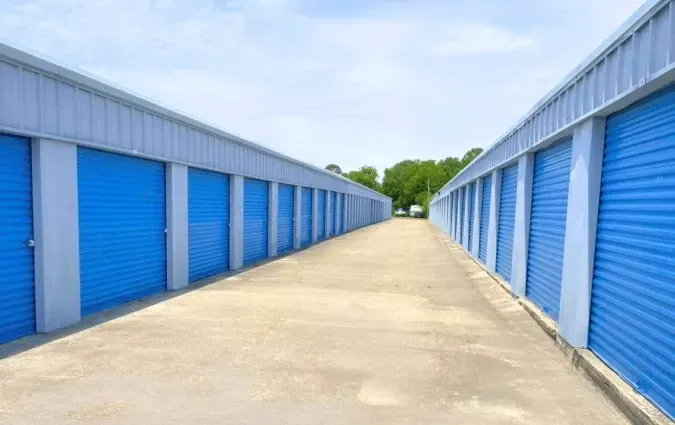
Drive-up storage is exactly what it sounds like - you pull your car, truck, or trailer directly up to the unit door, roll it open, and start loading or unloading without hauling anything through hallways, lobbies, or elevators. The units sit at ground level with exterior-facing roll-up doors, and the entire interaction between your vehicle and your stuff happens in one spot. That simplicity is the whole point.
The format exists because not everything fits on a hand truck, and not every trip to a storage unit should feel like a workout. If you've ever tried to wrestle a couch through a narrow corridor, squeeze a mattress into an elevator, or carry boxes of inventory down a flight of stairs, you already understand why drive-up access matters. It turns a 45-minute production into a 15-minute task.
Drive-up units are the most common storage format at facilities across the country, available in sizes ranging from small 5x5 closet-style units to large 10x30 spaces that can hold the contents of a multi-bedroom house. They're typically the most affordable option at a given facility because they don't include the building envelope, climate control systems, or interior hallway infrastructure that indoor units require.
That said, drive-up units are exterior units. They're weather-sealed and locked, but they aren't temperature or humidity regulated unless the facility specifically offers climate-controlled drive-up options (which some do). For items that are durable, weather-resistant, or stored short-term, that's not a concern. For temperature-sensitive belongings, it's worth understanding the trade-off before renting.
When evaluating drive-up storage, pay attention to aisle width (important for backing in trailers or larger vehicles), whether the facility has paved or gravel surfaces, what the access hours look like, and how the security setup works. Gated entry, individual access codes, and camera coverage should be standard.
The Storage Advantage lets you filter specifically for drive-up units so you can see what's available near you, compare sizes and pricing, and reserve a space that matches how you plan to use it.
When Drive-Up Access Makes the Biggest Difference
Drive-up storage works for a wide range of situations, but there are specific scenarios where the direct vehicle access goes from convenient to essential.
Moving and Transitional Storage
Moving is the single most common reason people rent a drive-up unit, and it's easy to see why. You back a rental truck or trailer up to the door, walk items straight from the truck bed into the unit, and reverse the process when you're ready to move into the new place. No stairs, no elevators, no narrow hallways to navigate with a dresser on a dolly. Formoving storage that bridges the gap between an old home and a new one, drive-up access cuts loading and unloading time significantly. It also reduces the physical strain of moving day, which matters when you're already exhausted from a full day of packing and hauling.
Business Inventory and Equipment
Businesses that store inventory, tools, or equipment in a self storage unit typically visit more frequently than a household renter does, and every trip involves loading or unloading items that are often heavy, awkward, or both. Contractors pulling power tools and materials between job sites, retailers restocking from overflow inventory, and event companies rotating tables, chairs, and staging gear all benefit from the speed of drive-up access. Forbusiness storage that sees regular traffic, the ability to pull a vehicle directly to the door and work from the tailgate turns a storage unit into a functional extension of your operation rather than an errand that eats into the workday.
Seasonal and Recreational Gear
Holiday decorations, camping equipment, skiing and snowboarding gear, kayaks, bicycles, lawn care equipment, patio furniture - the list of seasonal items that cycle in and out of storage throughout the year is long, and most of it is bulky or awkwardly shaped. Drive-up access makes swapping seasonal gear straightforward because you can pull right up, load the unit in spring, and pull right up again in fall to retrieve everything without the logistics of moving it through a building. If you're storing items that rotate on a regular schedule, the convenience of ground-level, vehicle-adjacent access adds up fast over the course of a year.
Furniture and Large Household Items
Sofas, bed frames, dressers, dining tables, appliances - the items most people store during a renovation, downsizing, or temporary relocation are exactly the kind of things you don't want to carry through a building. Drive-up units put a wide roll-up door at vehicle height, which means you can slide a mattress or couch directly from a truck bed into the unit without lifting it over thresholds or squeezing it around corners. Forhousehold storage involving large, heavy pieces, drive-up is the format that makes the job manageable without a professional moving crew.
Drive-Up Storage Compared to Other Storage Formats
Drive-up isn't the only storage format available, and it's not always the best fit depending on what you're storing. Here's how it stacks up against the alternatives.
Drive-Up vs. Indoor Storage
Indoor storage units sit inside a fully enclosed building and are accessed through interior hallways. They offer better protection from dust, weather, and temperature fluctuations because the building envelope acts as a buffer. The trade-off is access convenience - you'll typically park in a lot, walk to your unit through corridors, and use an elevator if the unit is on an upper floor. For items that are small enough to carry or wheel on a cart, indoor storage works fine. For heavy furniture, equipment, or frequent trips with a loaded vehicle, drive-up wins on efficiency.
Drive-Up vs. Climate-Controlled Storage
Climate-controlled storage actively manages temperature and humidity inside the unit, which matters for items vulnerable to heat, cold, moisture, or temperature swings. Most climate-controlled units are indoor, which means you lose the drive-up access format. Some facilities do offer climate-controlled drive-up units, but they're less common. If what you're storing is durable and not sensitive to environmental conditions, drive-up is the more practical and affordable choice. If you're storing wood furniture, electronics, documents, or anything organic, climate control may be worth the trade-off in access convenience.
Drive-Up vs. Warehouse Storage
Warehouse storage provides larger spaces with higher ceilings, wider doors, and sometimes loading dock access designed for palletized goods and commercial-scale inventory. Drive-up units top out around 10x30 or 10x40 at most facilities, which handles the majority of personal and small business storage needs. If your storage requirements exceed that - bulk materials, large equipment, or high-volume inventory - warehouse storage gives you the space and infrastructure that standard drive-up units don't. Use thestorage unit size guide to figure out whether a standard drive-up unit is large enough or whether you need to look at warehouse options.
Drive-Up Storage Questions, Answered
What sizes do drive-up storage units come in?
Drive-up units are typically available from 5x5 (25 sq ft) up to 10x30 or 10x40 (300-400 sq ft) depending on the facility. A 5x10 handles a small room's worth of items, a 10x10 fits the contents of a one-bedroom apartment, and a 10x20 or larger accommodates a multi-bedroom household. Thestorage unit size guide can help you match your belongings to the right unit dimensions.
Are drive-up units climate-controlled?
Most drive-up units are not climate-controlled because they're exterior units with roll-up doors rather than interior spaces within a sealed building. Some facilities do offer climate-controlled drive-up options, but they're less common. If your items are sensitive to temperature and humidity, ask the facility specifically whether their drive-up units include climate regulation or consider an indoor climate-controlled unit instead.
Can I back a truck or trailer up to a drive-up unit?
Yes - that's the primary advantage of the format. Drive-up units are designed for vehicle access, so you can back a pickup, moving truck, van, or trailer directly to the unit door. Check the facility's aisle width before renting if you'll be using a larger vehicle, as some facilities have wider driving lanes than others.
Are drive-up units secure?
Drive-up units are secured with individual locks (you provide your own or purchase one at the facility), and the property is typically protected by perimeter fencing, gated entry with access codes, and security cameras. Because drive-up units have exterior-facing doors, the lock you choose matters - a high-quality disc lock or shrouded padlock provides significantly more protection than a standard combination lock.
Are drive-up storage units cheaper than indoor units?
Generally, yes. Drive-up units don't carry the cost of interior building infrastructure, climate control systems, or hallway maintenance, so they tend to be priced lower than indoor or climate-controlled units at the same facility. The exact difference varies by location and market, but drive-up is typically the most budget-friendly format for a given unit size.
Can I use a drive-up unit for vehicle storage?
Some larger drive-up units (10x20 and above) can accommodate a car, motorcycle, or small recreational vehicle. However, most self storage facilities have specific policies about storing vehicles in standard units, and dedicatedvehicle storage spaces may be a better option if the facility offers them. Check with the facility before using a standard drive-up unit for vehicle storage.
Find Drive-Up Storage Near You
Drive-up access turns storage from a chore into a quick stop. Search drive-up storage options on The Storage Advantage to compare facilities near you by unit size, features, and pricing, and reserve a space you can pull right up to.